
Electronic bikes and scooters are transforming how Illinois residents commute and enjoy recreational riding. Rental Companies like Lime and Divvy are in almost every major city offering easy access to E-bikes and E-Scooters. While convenient, E-bikes carry a rising risk of serious injury, especially in collisions with vehicles, pedestrians, or other E-bike riders. In fact, a 2024 study in the American Journal of Preventive Medicine found that nearly half of Illinois E-bike injuries resulted from collisions with motor vehicles. Compared with traditional bicycle injuries, E-bike riders were more likely to require hospitalization, admission to intensive care, or treatment for traumatic brain injuries. These findings show that E-bike accidents can result in serious injuries.
Consulting an experienced attorney early, like those at Vito & Dollenmaier Law, can help protect your rights and guide your recovery.
Section I: Understanding Your Rights After Being Injured in an Accident
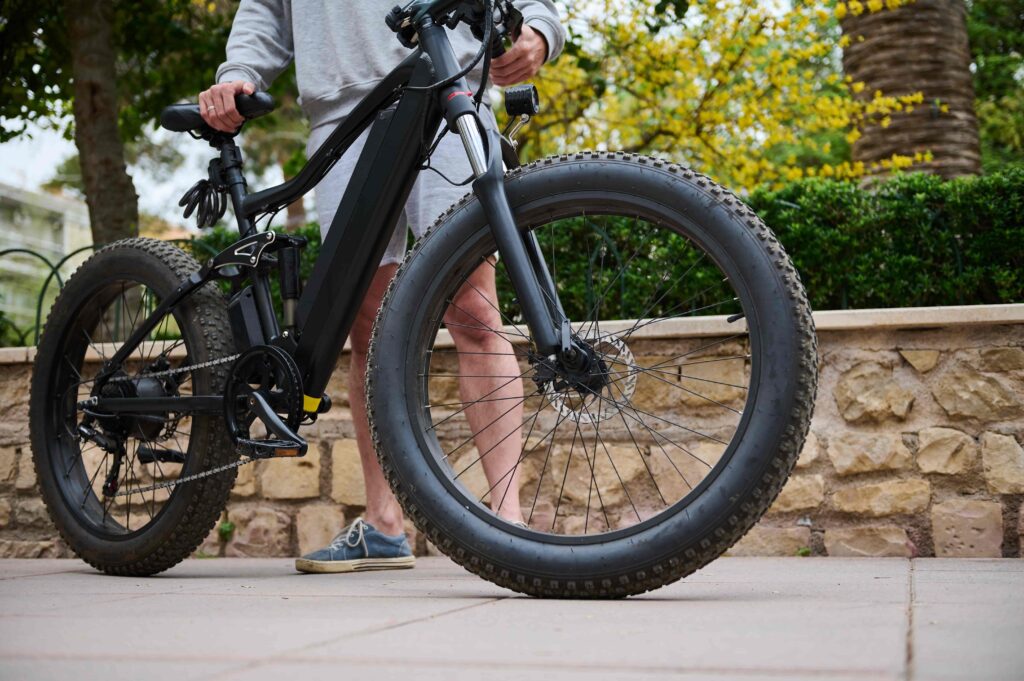
Can I sue for being injured in an accident involving an E-bike or E-scooter?
Absolutely! Anyone injured due to another person’s negligence might have the right to seek compensation under Illinois law. Examples include:
- An E-bike rider traveling in a designated lane when a driver suddenly opens their car door into the lane, causing the E-bike rider to crash. In this situation, the E-bike rider may have a claim against the driver.
- A pedestrian crossing legally in a crosswalk could be struck if an E-bike rider speeds through the red light. That pedestrian may seek damages for their injuries.
- A driver lawfully proceeding through an intersection might be hit by an E-bike rider who ignored a stop sign. In that situation, the motorist could pursue a claim against the negligent E-bike rider.
- An E-bike customer may hold a rental company responsible if the rented E-bike was defective or improperly maintained, or to municipalities if poor infrastructure contributed to the accident.
- Property owners may recover the costs of repairs from the E-bike rider or their insurer if an E-bike rider crashes into the glass storefront of a business.
- An E-bike rider dying because of a driver’s negligence, surviving family members may bring a claim under the Illinois Wrongful Death Act, 740 ILCS 180/1 et seq. (West 2025).
What needs to happen for me to sue a person or entity?
In many cases, an injured party may have the ability to bring a claim under Illinois common law negligence, which requires proving duty, breach, causation, and damages. This means showing that the other party owed you a duty of care, violated that duty, directly caused your injuries, and that you suffered actual harm as a result. Evidence of traffic law or local ordinance violations may also support a claim.
Using one of our examples, a driver struck by an E-bike rider who ran a red light could have a basis for alleging liability under the Illinois Vehicle Code, 625 ILCS 5, §§ 11‑1501, 11‑601 (West 2025). If the accident results in death, family members may also bring claims under the Illinois Wrongful Death Act, 740 ILCS 180/1 et seq. (West 2025).
What is Illinois Vehicle Code (625 ILCS 5)?
Electronic bikes and scooters in Illinois are governed primarily by the Illinois Vehicle Code, 625 ILCS 5, including §§ 11‑1501, 11‑601, 1‑140.11, and 11‑1518 (West 2025), which establish rules for safe operation and rider responsibilities.
E-bike and E-scooters defined:
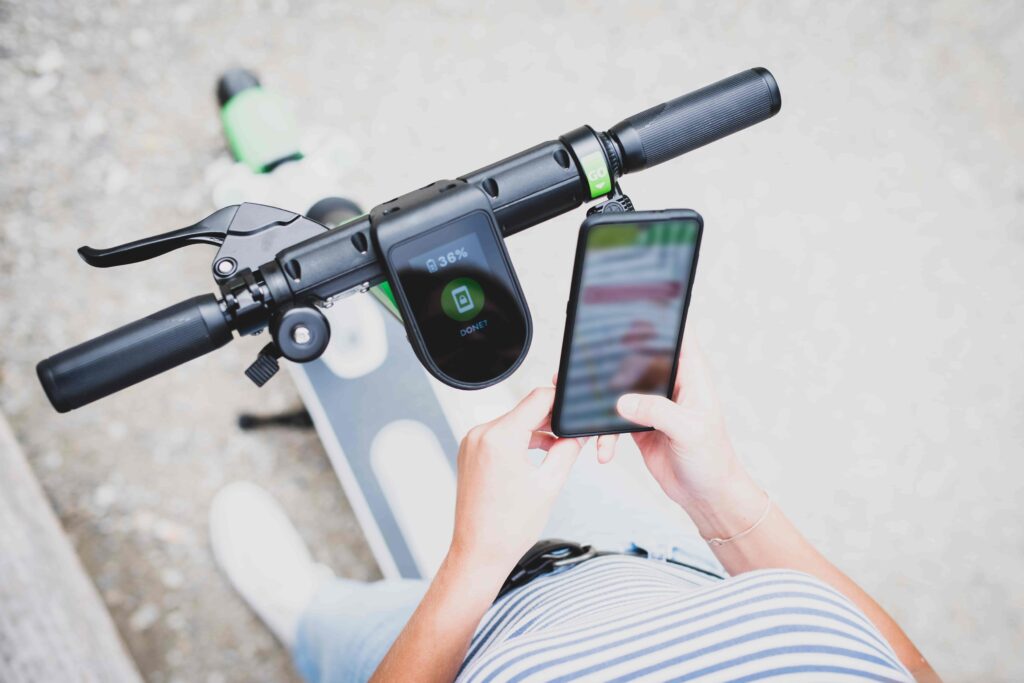
Low-speed E-bikes are defined as two- or three-wheeled bicycles with fully functioning pedals and an electric motor of 750 watts or less.
- Class 1 – A motor that assists only when the rider is pedaling and that ceases to aid when the bicycle reaches a speed of 20 mph.
- Class 2 – A motor that may be used exclusively to propel the bicycle and that is not capable of aiding when the bicycle reaches a speed of 20 mph.
- Class 3 – A motor that assists only when the rider is pedaling and that ceases to aid when the bicycle reaches a speed of 28 mph.
Low speed E-scooters are defined as a device weighing less than 100 lbs. with two- or three-wheels, handlebars, and a floorboard that can be stood upon while riding. This is powered by an electric motor and human power, and whose maximum speed is no more than 10 mph.
Illinois doesn’t clearly define faster electric vehicles like e-motos, so local rules can vary a lot. Riders, retailers, and even law enforcement can get confused, which is why it is important to understand how local ordinances differ from state law.
How are local ordinances different from the state law?
Many municipalities, including those in Northwest Suburbs of Chicago have local rules regulating E-bike and E-scooter use. These ordinances can affect where you can ride, the minimum age for E-bike riders, equipment requirements, and potential fines. Knowing both state and local rules is important after an accident, as violations could not only lead to injuries or loss, but also influence liability and compensation.
Common Rules Across the Region:
- Most towns require riders to be at least 16 for Class 3 E-bikes. Younger riders may operate Class 1 or 2 E-bikes under certain conditions.
- E-bikes are generally prohibited on sidewalks and may be restricted in parks, downtown areas, or certain trails.
- Helmets are commonly required, especially for minors. Lights and reflectors are required for nighttime riding.
- Class 1 and 2 E-bikes are typically limited to 20 mph, while Class 3 may reach up to 28 mph on streets.
- Riders must obey traffic signals, stop signs, and other basic traffic laws.
Town-Specific Highlights:
Palatine: E-bike and E-scooter riders must have completed driver’s education, hold a driver’s license, or be over 18. Both devices cannot be used on sidewalks or most public property. Nighttime lighting requirements include a front light visible from 500 ft and a rear red light or reflector visible from 50 ft. Riders must wear helmets and avoid distracted riding. Violations can result in fines up to $50, and minors may be held until a guardian is present.
Schaumburg: E-bike and E-scooter riders must be at least or over 16 years of age. Low-speed E-bikes and E-scooters are allowed on streets and paths. E-bikes with speeds over 20 mph must remain on streets. Sidewalk riding is prohibited. Violations can result in fines up to $500 and temporary impoundment for reckless conduct.
Rolling Meadows: Minimum age for Class 3 E-bikes is 16. All E-bike riders must follow the rules of the road. Sidewalks are off limits. High-powered e-motor over 750 watts are prohibited on public property. Class 1 and 2 E-bikes are limited to 20 mph. Class 3 E-bikes can assist up to 28 mph.
Elk Grove Village: Riders must hold a valid driver’s license. E-bike riders may only operate on roads with speed limits under 35 mph. Nighttime lighting requirements include front light visible 500 ft and rear light must be visible 100 ft. Riding while distracted is prohibited. Violations can result in fines up to $200, and minors may be held until guardian is present.
Arlington Heights: Adults are responsible for any infractions committed by children under 16. Fines begin at $75 for the first offense, $150 for the second, and $250 for the third. Upon the third offense, or for reckless operation, the vehicle may be impounded.
Other nearby towns in Illinois, like Fox Lake and Lake Forest, have stricter rules including insurance requirements and zero-tolerance enforcement for juveniles. For towns without specific ordinances, riders must comply with state E-bike laws. After an E-bike accident, understanding specific laws in your state and municipality is crucial, as compliance, or lack thereof, may impact liability and compensation in your claim. Local ordinances change often, so it is important to check your town’s current rules or consult attorneys, such as those at Vito and Dollenmaier Law, to review requirements.
Steps to take after an injury involving an E-bike rider

After an E-bike accident, your priority should always be your health. Even if your injuries seem minor, it is important to get checked by a medical professional because some conditions may not be immediately obvious. Prompt medical care not only protects your health but also creates an official record of your injuries. This documentation can serve as important evidence in supporting a damages claim. At the same time, filing a police report might provide an official account of what happened and who was involved, which may later be helpful in determining liability.
What if I am still undergoing medical care two years after my accident?
If the injured person is not a minor at the time of the accident, the standard two-year statute of limitations (735 ILCS 5/13-202) applies. This means a lawsuit generally needs to be filed within two years of the accident, even if the victim is still receiving medical treatment. Ongoing treatment does not extend this deadline, so it’s a good idea to consult with an attorney early so that any potential claim is filed within the appropriate time frame.
For minors at the time of the accident, the statute of limitations is paused until they turn 18, giving them until their 20th birthday to file a claim. Understanding these general timelines can help protect your rights, but speaking with a personal injury attorney can make sure you get guidance for your specific situation.
What information will help your attorneys build your case?
Being proactive in gathering information in an organized fashion is crucial to your case. You should gather the following information:
- Medical Records and billing statements.
- Witness names and contact information which typically includes police officers, passengers, or bystanders who saw the accident occur.
- Insurance Information of your own and other responsible party.
- Names of specific person or entity involved.
All of this helps your legal team assess and file a complaint, which is what gives the courts notice and starts the legal action for the injured party.
What type of damages may be available in my case?
If your case establishes the four key elements of negligence, including duty, breach, causation, and damages, claimants may be able to recover several types of damages:
- Compensatory damages may include both economic and non-economic losses caused by the accident, including medical expenses such as hospital bills, surgeries, therapy, and any future care required due to your injuries. This may also include lost wages for time missed from work and compensation for pain and suffering, such as emotional distress, physical discomfort, and loss of enjoyment of life.
- Property damage can be recovered separately and covers repair or replacement of any personal belongings damaged in the accident, including your E-bike, vehicles involved, or other personal items affected by the crash.
- Wrongful death can also be pursued in tragic cases where family members lost their loved ones and can pursue compensation for funeral and burial expenses, loss of financial support, and loss of companionship and guidance.
Does Illinois have a limit on the amount of recovery you can claim

In Lebron v. Gottlieb Memorial Hospital, 237 Ill. 2d 217, 930 N.E.2d 895 (2010), the Illinois Supreme Court struck down statutory caps on noneconomic damages in medical malpractice actions, holding that such caps violated the state constitution’s separation of powers. The court had reached a similar conclusion earlier in Best v. Taylor Machine Works, 179 Ill. 2d 367, 689 N.E.2d 1057 (1997).
What this means for personal injury claims, including E-bike accidents, is that Illinois does not impose a general cap on the amount of damages you can recover. Injury victims may seek damages for medical expenses, lost wages, property damage, and pain and suffering, as well as wrongful death damages when applicable.
However, under the Illinois Comparative Negligence Act, 735 ILCS 5/2-1116 (West 2025), your recovery could be reduced if you share some fault in the accident, and if you are more than 50% responsible, you cannot recover damages at all.
Section II: Bringing Your Case to the Court’s Attention
While trying to address your immediate needs, it is important to seek an experienced attorney, like those from Vito & Dollenmaier Law, who can go through the process with you. This includes when and where the accident occurred, how it happened, and who was involved. Photographs of the scene and your injuries, witness statements, and records of any damaged property, such as your E-bike or personal items, help reconstruct the events and demonstrate the tangible impact of the accident. Collecting important information early underscores the critical importance of seeking medical care promptly and can help your attorney better understand and present your case.
Section III: What Happens After My Complaint Is Filed in Court?
What will your attorneys do?
Once your attorney files the lawsuit in the appropriate Illinois Circuit Court, typically in the county where the accident occurred, the legal process formally begins. Personal injury cases like E-bike accidents are governed under the Illinois Code of Civil Procedure and are subject to the two-year statute of limitations under 735 ILCS 5/13-202 (West 2025). The filing includes a complaint, which lays out the facts of your case, the legal basis for recovery, and the damages you are seeking.
What can you expect during the litigation?
After filing, the defendant may respond, and both sides exchange evidence in discovery. This typically includes interrogatories, requests for documents, and depositions. This stage is often where the strength of each side’s case becomes clearer and can lead to settlement discussions.
Many cases settle, but if not, the case might go to trial, usually before a jury, or in some cases, a judge alone through a bench trial. Either side may appeal, though most cases settle beforehand.
Protect Your Rights After an E-bike or E-scooter Accident
If you or a loved one has been injured in an E-bike or E-scooter accident, act quickly. At Vito & Dollenmaier Law, we understand the complexities of these types accidents under both state and local laws, and we are committed to guiding you every step of the way, so you can focus on your recovery while we fight for justice. Contact us today for a free consultation to discuss your potential claim.
1 Shannon, B., et al. (2024). Injuries From Electric Bikes and Scooters: Illinois, U.S., 2021–2023. American Journal of Preventive Medicine, 69(6), 108065. https://www.ajpmonline.org/article/S0749-3797(25)00533-1/abstract
Vito & Dollenmaier Law Office
3701 W Algonquin Rd #330,
Rolling Meadows, IL 60008, United States