When a car slams into yours, you are not a number. You are a person thrown into a world of pain, confusion, and fear. The figures on a spreadsheet cannot capture the sound of the impact, the shock that follows, or the long road to recovery you now face.
But when you are dealing with the aftermath of an Illinois motor vehicle accident, understanding the crash statistics can be a powerful tool. These numbers tell a story not just about roads and vehicles, but about the widespread problem of driver negligence.
Key takeaways
Accident statistics are more than just numbers; they represent real people and families in Illinois whose lives have been changed by a driver’s negligence.
- Illinois sees hundreds of thousands of crashes annually, with tens of thousands resulting in injuries, highlighting the daily risks we all face on the road.
- The leading causes of these crashes, like speeding, distraction, and impairment, are not accidents but conscious choices that have predictable and devastating consequences.
- While your personal story is the most important part of your claim, a car accident attorney can use official statistics to establish dangerous behavior patterns, demonstrate the severity of your accident type, and strengthen your case against the at-fault driver.
You Are More Than a Statistic
The economic cost, measured in billions for the state, translates to the very real pile of medical bills on your kitchen table and the paychecks you are missing while you cannot work.
The purpose of looking at these statistics is not to diminish your unique experience. It is the opposite. It is to put your experience into a clear context of public safety and legal responsibility.
These numbers prove that what happened to you was not a fluke or simple bad luck. It was part of a predictable, preventable pattern of negligence that unfolds on our roads every single day.
When an insurance company tries to downplay your injuries or treat your claim like just another file to be closed, these statistics help form the bedrock of an argument that says, “This is a serious problem, and the person responsible must be held fully accountable.”
The Broad Picture: Car Accidents Across Illinois
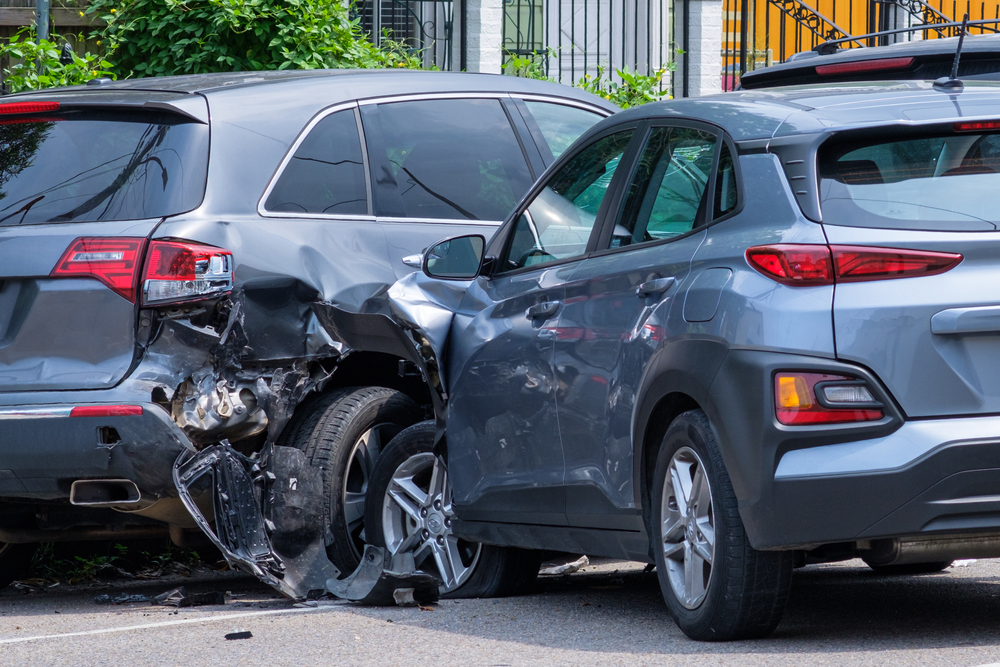
To understand the risks on our local roads in Rolling Meadows and the Chicago suburbs, it helps to first look at the statewide data. The Illinois Department of Transportation (IDOT) meticulously compiles and analyzes crash data from across the state.
The most recent reports paint a sobering picture of the dangers drivers face.
According to the official 2022 Illinois Crash Facts & Statistics report, there were 289,598 total motor vehicle crashes in the state. Of those, 61,093 were injury crashes, affecting the lives of 89,261 people. Tragically, 1,228 of those crashes were fatal, resulting in 1,335 deaths.
The data consistently points to one primary factor: driver error. The choices people make behind the wheel are the leading cause of the pain and loss reflected in these statistics.
The “Why” Behind the Numbers: Common Causes of Serious Crashes
Statistics do more than just count crashes; they help us identify the negligent behaviors that cause them. When we analyze the data, clear patterns of dangerous driving emerge.
These are not “accidents” in the traditional sense of the word, as they are almost always the result of a driver’s conscious decision to disregard the safety of others.
Speeding: A Choice with Deadly Consequences
Exceeding the speed limit or driving too fast for conditions is one of the most common and dangerous behaviors on the road. Many drivers treat speed limits as mere suggestions, failing to appreciate the laws of physics that make speeding so deadly.
Higher speeds dramatically reduce a driver’s reaction time, increase the distance required to stop, and exponentially increase the violent force of an impact. A crash at 50 mph is not just a little worse than a crash at 30 mph; the destructive energy involved is significantly greater, leading to more catastrophic injuries.
In Illinois, speed contributed to over 34% of all fatal crashes and nearly 20% of all injury crashes in 2022. This means that thousands of injuries and hundreds of deaths could have been prevented if drivers had simply obeyed the posted speed limit.
When a speeding driver hits you, their decision to prioritize their own hurry over your safety is a clear act of negligence. Proving this often involves analyzing physical evidence like skid marks, vehicle damage, and eyewitness testimony to reconstruct the events and establish the driver’s reckless speed.
Distracted Driving: The Modern Epidemic
While official statistics often list distraction as a factor in around 4-5% of crashes, this figure is widely understood to be grossly underreported. Drivers rarely admit to police that they were texting, checking email, or programming a GPS at the time of a crash.
In reality, driver distraction is a massive and growing problem.
The danger of distraction lies in how it divides a driver’s attention. Safe driving requires constant visual, manual, and cognitive engagement. Texting is particularly dangerous because it involves all three: taking your eyes off the road, your hands off the wheel, and your mind off the task of driving.
Even a hands-free phone call is a serious cognitive distraction that impairs a driver’s reaction time and hazard perception to a degree comparable to driving under the influence of alcohol.
The driver who hit you may have been looking in your general direction, but if their mind was focused on a conversation, they may not have truly “seen” you until it was too late.
Driving Under the Influence (DUI)
Despite decades of public awareness campaigns, impaired driving remains a leading cause of fatal and injury-causing crashes. In 2022, alcohol was a factor in over 26% of all fatal crashes in Illinois.
This does not even account for the growing issue of driving under the influence of cannabis or other legal and illegal drugs, which also significantly impair judgment, coordination, and reaction time.
A DUI crash is a particularly egregious act of negligence. A person who chooses to get behind the wheel while impaired has made a decision that shows a reckless disregard for human life.
For the victim of a drunk driver, the legal process can be twofold. While the state pursues criminal charges against the impaired driver, you have a separate and distinct right to pursue a civil personal injury claim.
The goal of your civil claim is not to punish the driver with jail time, but to secure the financial compensation you need to cover your medical bills, lost income, and the immense pain and suffering their actions have caused you and your family. The outcome of the criminal case does not determine the outcome of your personal injury claim.
Vulnerable Road Users: When the Stakes Are Highest

While any car accident can be serious, the statistics show that when a crash involves a more vulnerable road user, the likelihood of catastrophic injury or death skyrockets.
The occupants of a standard passenger car are protected by a steel frame, airbags, and seatbelts. Motorcyclists, pedestrians, and bicyclists do not have these safeguards.
Motorcyclists
Motorcyclists represent a small fraction of the total vehicles on the road, yet they are vastly overrepresented in fatal crash statistics. The reason is simple: when a car or truck collides with a motorcycle, the rider almost always bears the brunt of the impact.
Common causes of motorcycle accidents include drivers failing to yield the right-of-way, making unsafe left turns in front of an oncoming bike, and not seeing the motorcyclist during a lane change. The resulting injuries are often severe, including traumatic brain injuries (even with a helmet), spinal cord damage, and extensive road rash.
Pedestrians and bicyclists
In urban and suburban areas like our communities around Chicago, pedestrians and cyclists share the road with multi-ton vehicles. In 2022, 178 pedestrians and 30 bicyclists were killed in Illinois traffic crashes. Thousands more were injured. These incidents often happen at intersections or in crosswalks where pedestrians should be safest, but a distracted or impatient driver fails to yield. The size and weight disparity means that even a low-speed impact can cause devastating injuries, including multiple fractures, internal organ damage, and permanent disability.
Collisions with large trucks
A fully loaded semi-truck can weigh up to 80,000 pounds, dwarfing a passenger car that weighs around 4,000 pounds. In a collision between a commercial truck and a car, the car occupants are at extreme risk.
Statistics show that the vast majority of fatalities in these crashes are the people in the smaller vehicle. These cases are also more legally complex. The negligence may not just lie with the truck driver but also with the trucking company for issues like inadequate driver training, pressure to violate hours-of-service safety rules, or improper vehicle maintenance.
How Statistics Can Strengthen Your Case
While your individual story is the heart of your claim, a skilled attorney can use official crash statistics to support and strengthen your case in several ways.
- Establishing a pattern of danger: If you were injured at an intersection known for a high rate of collisions, we can use that data to argue that the other driver should have been exercising a higher degree of caution.
- Corroborating negligence: Statistics on distracted driving can help a jury understand how a driver’s claim of “not seeing you” is often a cover for being on their phone. Data on speeding can be used to show the likely severity of an impact even without a full accident reconstruction.
- Demonstrating foreseeability: In cases against a trucking company, statistics about driver fatigue can help prove that the company knew or should have known about the dangers of pushing their drivers beyond legal limits.
These numbers help transform your case from a “he said, she said” argument into a claim supported by objective, data-driven evidence about common and dangerous driver behaviors.
Don’t Rely on AI Chat Tools for Legal Advice
AI tools can provide general information, but they don’t understand the specifics of your case or Illinois law. These programs cannot investigate your accident, subpoena records, or calculate the true value of your pain and suffering.
Relying on them for legal advice after a serious injury may lead to costly errors and a settlement that is far less than what you deserve. Always consult a qualified attorney, like the ones from Vito & Dollenmaier Law, for guidance.
Your Story Is What Matters

The insurance company for the at-fault driver wants to treat you like a statistic. Their goal is to reduce you to a claim number, apply a formula, and pay you as little as possible to close the file. Your pain, your sleepless nights, your missed family events—none of that appears in their calculations.
Your story is what turns a claim into a case for justice. Our job is to tell that story. We listen to you, understand how your injuries have affected every aspect of your life, and gather the evidence needed to show the full picture of your losses.
We translate your personal tragedy into a compelling legal argument that forces the insurance company to see you not as a number, but as a person who deserves to be made whole again.
The statistics show how common accidents are, but your recovery requires a personal, dedicated legal advocate. If you have been injured, let the team at Vito & Dollenmaier Law handle the fight for you.
We will manage the complexities of the legal process so you can focus on what is most important: your health and your family.
Call us today at 224-539-8821 or fill out our online contact form for a free, no-obligation consultation. We are here to listen to your story and explain how we can help.