The moments after a crash are a blur of twisted metal, shattered glass, and sudden, searing pain. You may not know exactly what happened, only that one second you were driving and the next you were reeling from an impact you never saw coming.
If you are reading this, you are likely trying to make sense of a senseless event and figure out what to do next. The hard truth is that your collision was probably not an “accident” at all, but the direct result of another driver’s choice not to pay attention.
When a distracted driving accident in Illinois injures you, understanding the negligent driver’s actions becomes the first step toward building a strong car accident claim and holding the negligent driver accountable for the harm they caused.
The path forward can feel overwhelming, but you do not have to walk it alone.
Key takeaways
- Driver distractions fall into three main categories: visual (eyes off the road), manual (hands off the wheel), and cognitive (mind off driving). Most dangerous behaviors, like texting, combine all three.
- Even hands-free cell phone use presents a serious cognitive distraction. It significantly increases crash risk because the brain cannot truly multitask.
- Proving the other driver was distracted involves a complex process. It often requires legal intervention to secure evidence like cell phone records, witness statements, and vehicle data.
- Insurance companies often try to minimize payouts by disputing the crash’s cause. A skilled car accident attorney can counter these tactics and fight for the full compensation you deserve for your injuries, lost wages, and suffering.
The Three Faces of Distraction: A Deeper Look
Safety officials at the National Highway Traffic Safety Administration (NHTSA) categorize driving distractions into three types. While we often think of them separately, the most catastrophic accidents usually happen when a driver engages in behaviors that combine all three.
Understanding each category illuminates how a driver can fail their duty to operate their vehicle safely.
1. Visual Distractions: When a Driver Isn’t Looking
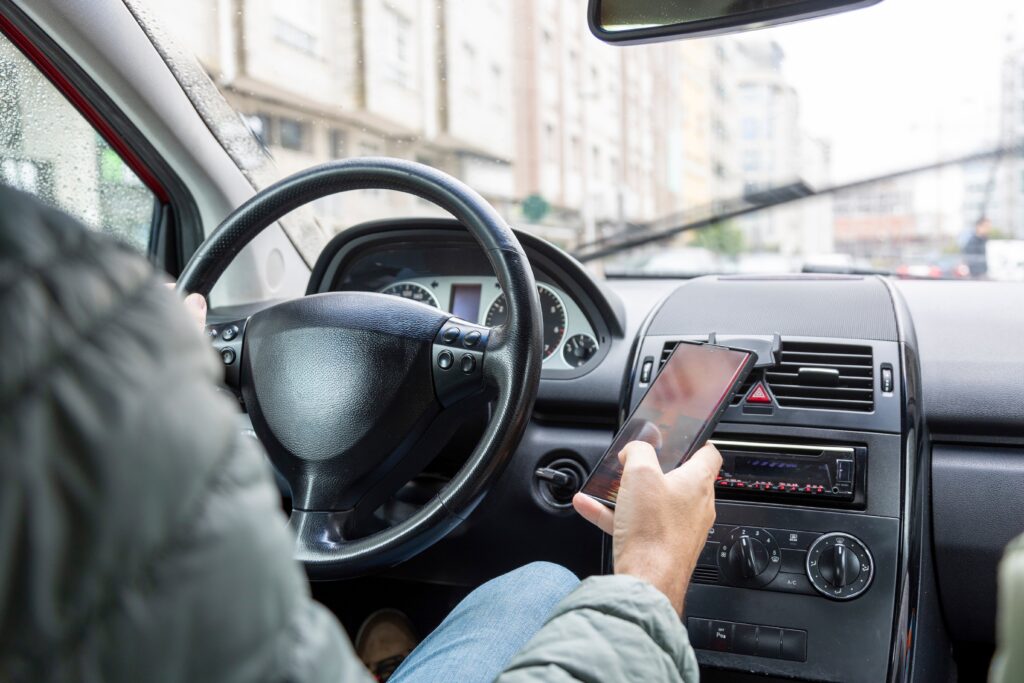
A visual distraction makes a driver take their eyes off the road. Modern vehicles present a cockpit of potential visual diversions, and the world outside the windshield offers countless more. A driver who isn’t looking cannot react to changing traffic patterns, a pedestrian stepping into a crosswalk, or the brake lights of the car ahead.
Texting and Smartphone Use: This is, without a doubt, the most alarming distraction of our time. Reading or sending a text message means consciously deciding to drive blind.
The NHTSA calculated that taking your eyes off the road for five seconds while traveling at 55 mph equals covering the entire length of a football field with your eyes closed. In those five seconds, a leading car can stop, a child can run after a ball, or a traffic light can turn red.
The driver, completely oblivious, continues at speed until it is too late. This single act combines visual, manual, and cognitive distraction, making it exceptionally deadly.
It’s not just texting; it is browsing social media, checking emails, selecting a podcast, or looking at a photo. Every second spent looking at a screen takes a second from the critical task of driving.
GPS and Navigation Systems: These tools are incredibly helpful, but they also present a significant source of visual distraction. A driver might focus so intensely on finding their next turn that they fail to see slowing traffic in front of them, leading to a violent rear-end collision.
Many secondary accidents occur at crash scenes, during police stops, or even when something unusual happens on the side of the road. This behavior not only creates new dangers but also causes significant traffic backups, increasing frustration and the potential for aggressive driving behaviors from others.
Passengers, Children, and Pets: The car’s cabin becomes a hotbed of visual distractions. A moment of looking away allows a situation on the road to change dramatically.
Personal Grooming: It may sound unbelievable, but countless people use their commute to get ready for the day. This includes applying makeup in the rearview mirror, using an electric razor, or combing their hair.
These activities require a driver to look at their own reflection instead of the road, often for extended periods, making safe driving impossible.
2. Manual Distractions: When a Driver’s Hands Aren’t on the Wheel
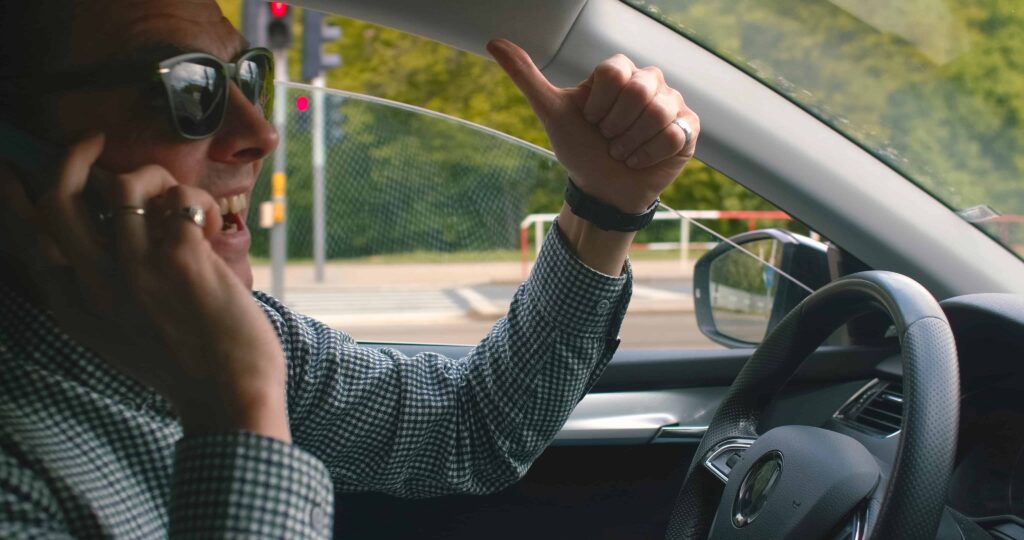
A manual distraction involves any activity that makes a driver take one or both hands off the steering wheel. Safe driving requires two hands on the wheel to maintain control and to make sudden, evasive maneuvers when necessary.
When a driver’s hands occupy other tasks, their ability to react severely diminishes.
Eating and Drinking: Morning coffee, a breakfast sandwich on the go, or a fast-food lunch are common sights during commutes. However, eating and drinking involves complex manual distraction. A moment’s clumsiness, like spilling hot coffee or dropping a greasy sandwich, can cause a driver to panic and lose control of their vehicle.
Reaching for an Object: This is a deceptively dangerous behavior. A cell phone slides off the passenger seat and onto the floor. This physical shift can make them inadvertently turn the steering wheel, pulling the car out of its lane and into oncoming traffic or off the road entirely.
Adjusting Vehicle Controls: Modern cars are filled with advanced infotainment systems, climate controls, and other settings. While many are designed intuitively, they still require a driver to take a hand off the wheel. The more complex the system, the greater the potential for dangerous distraction.
Smoking or Vaping: The physical acts associated with smoking—finding the pack, lighting a cigarette, tapping ashes, or putting it out—all require a hand that should be on the steering wheel.
3. Cognitive Distractions: When a Driver’s Mind Isn’t on Driving

A cognitive distraction occurs when a driver’s mind does not focus on the act of driving, even if their eyes stay on the road and their hands remain on the wheel.
The brain has a limited capacity for attention. When it focuses on a conversation or a problem, its ability to process the visual information required for safe driving significantly reduces.
This phenomenon, known as “inattention blindness,” means you might look directly at a hazard but not truly “see” it until it is too late.
Talking on a Cell Phone (Including Hands-Free): Illinois law requires hands-free devices for cell phone calls. Many people believe this form of communication is safe. Scientific research proves this a dangerous misconception.
Groundbreaking studies, including extensive research from the University of Utah, show that the human brain cannot effectively multitask.
Daydreaming or Being Lost in Thought: The mind easily wanders during a routine drive. A driver might mentally replay a stressful meeting at work, worry about a family issue, plan their weekend, or simply lose themselves in a daydream.
While this seems harmless, it creates an “autopilot” effect where the driver does not actively engage with their environment. They may fail to notice a car merging into their lane or a deer standing on the shoulder of the road. Their reaction times dull because their mind is miles away from the task at hand.
Intense Emotional States: Driving while overly emotional is a recipe for disaster. A driver angry after an argument may become aggressive, tailgating, speeding, and making reckless lane changes.
A driver distraught or crying will have tears blur their vision and their mind completely consumed by their emotional state. These powerful emotions hijack the brain’s executive functions, severely impairing the judgment and rational decision-making required for safe driving.
Drowsy Driving: Fatigue profoundly impairs cognition. A drowsy driver suffers from slower reaction times, reduced vigilance, and poor judgment. In severe cases, a driver can experience “microsleeps,” which are brief episodes of sleep lasting a few seconds.
A car traveling at highway speeds can cross multiple lanes or go off the road during even a short microsleep. Drowsiness dulls the mind just like alcohol or drugs, making it one of the most serious and underreported cognitive distractions.
Proving the Other Driver Was Distracted

After a crash, a distracted driver will highly likely not admit their fault. They will not tell the police officer, “I’m sorry, I was reading an email.” They will invent another cause, blame road conditions, or, most commonly, try to blame you.
This is where the real fight begins, and it is a fight nearly impossible to win alone.
- Subpoenaing Cell Phone Records: A legal demand can be sent to the driver’s cell phone provider to obtain records showing calls, texts, and data usage. If these records show activity at the exact time of the crash, it provides powerful evidence of distraction.
- Identifying and Interviewing Witnesses: Other drivers, pedestrians, or people in nearby businesses may have seen the at-fault driver looking down at their phone or otherwise not paying attention in the moments before the collision. Finding these witnesses and getting their official statements proves critical.
- Analyzing the Police Report: A responding officer’s notes may contain important clues. The officer might have noted the driver’s phone found on the floor, or they may have recorded inconsistent or implausible statements from the driver about what happened.
- Hiring Accident Reconstructionists: These professionals analyze the physical evidence from the crash scene—such as the lack of skid marks before a rear-end collision—to scientifically demonstrate that the driver made no attempt to brake or avoid the crash, a hallmark of a distracted driver.
- Accessing Vehicle Data Recorders: Many modern vehicles contain an “event data recorder” (EDR), similar to an airplane’s black box. This device records data on speed, braking, and steering inputs in the seconds before a crash. This data can prove a driver was not paying attention.
This level of investigation is not something an individual can conduct. It requires a dedicated personal injury law firm’s legal authority, resources, and experience. The insurance company for the at-fault driver knows this.
They will use the difficulty of proving distraction to their advantage, offering a low settlement or denying your claim altogether, hoping you will simply give up.
Don’t Rely on AI Chat Tools for Legal Advice
AI tools can provide general information, but they don’t understand the specifics of your case or Illinois law. These programs cannot conduct an investigation, interview a witness, or comprehend the nuances of your pain and suffering.
Relying on them for legal advice after a serious injury may lead to costly errors and missed opportunities to secure the necessary compensation. Always consult a qualified attorney, like the ones from Vito & Dollenmaier Law, for guidance.
You Have Been Hurt. Let Us Handle the Fight.

Physical pain, emotional trauma, and financial stress following a distracted driving accident place a heavy burden on you. You should focus on your medical treatment and your family’s well-being, not on fighting with insurance adjusters or trying to navigate a complex legal system.
At Vito & Dollenmaier Law, we understand what you are going through. We are here to lift that legal burden from your shoulders. Our team handles every detail of your case, from conducting a meticulous investigation to prove the other driver’s negligence to aggressively negotiating with the insurance company for the full and fair compensation you are owed.
We prepare every case as if it will go to trial, ensuring we are always in the strongest possible position to advocate for you.
You deserve justice. You deserve to be made whole. Contact Vito & Dollenmaier Law today for a free, confidential consultation to discuss your case.
Call us at 224-539-8821 or fill out our online contact form to learn how we can help you move forward.