The blur of motion, the sickening lurch in your stomach, and the complete lack of control are the sensations you experience when another driver treats the road like a personal playground. It was more than a mistake; it felt intentional.
The other driver was not just careless; they operated their vehicle with a shocking lack of concern for anyone else’s safety. When another driver’s reckless driving in Illinois hurts you, the sense of injustice is profound. You now have serious injuries, a damaged vehicle, and a fight you never asked for.
Understanding that the driver’s actions go beyond simple carelessness is part of your personal injury claim and your effort to hold that negligent driver fully accountable.
The Anatomy of a Reckless Act
A reckless driving crash is fundamentally different from a typical accident. Here is what you need to understand as you move forward.
- It is more than a mistake: Reckless driving is not just an error in judgment; it is a conscious or willful disregard for the safety of others. This distinction affects your legal claim.
- The law recognizes the difference: Illinois has a specific statute that defines reckless driving and sets it apart from a standard traffic violation. This legal definition can be a powerful tool in your case.
- Proof requires a deeper investigation: Proving a driver was reckless, not just negligent, often requires more than a police report. It involves uncovering evidence of their state of mind and the extreme nature of their actions.
- It can impact your compensation: Demonstrating that the at-fault driver acted recklessly strengthens your case and, in some rare circumstances, allows a court to consider punitive damages designed to punish the offender.
What “Reckless Driving” Truly Means in Illinois
Most people think of reckless driving in terms of what they see in movies: high-speed chases and impossible stunts. In the real world, the definition is both simpler and broader, but it always centers on the driver’s deliberate indifference to safety.
The law is not vague on this point.
The Illinois Vehicle Code (625 ILCS 5/11-503) states that a person commits reckless driving if they drive any vehicle “with a willful or wanton disregard for the safety of persons or property.”
Let’s break down that phrase: “willful or wanton disregard.”
- Willful means the act was intentional. The driver meant to perform the action, like intentionally running a red light or aggressively weaving through traffic.
- Wanton means the driver showed a conscious and reckless indifference to the consequences. They knew their actions were incredibly dangerous but chose to do them anyway.
This is the core difference between simple negligence and recklessness. A negligent driver might cause an accident because they briefly looked away from the road to adjust the radio.
They made a mistake. A reckless driver causes an accident because they were trying to see how fast their car could go on a busy street. They made a deliberate choice to endanger everyone around them.
The Many Faces of Reckless Driving on Our Roads
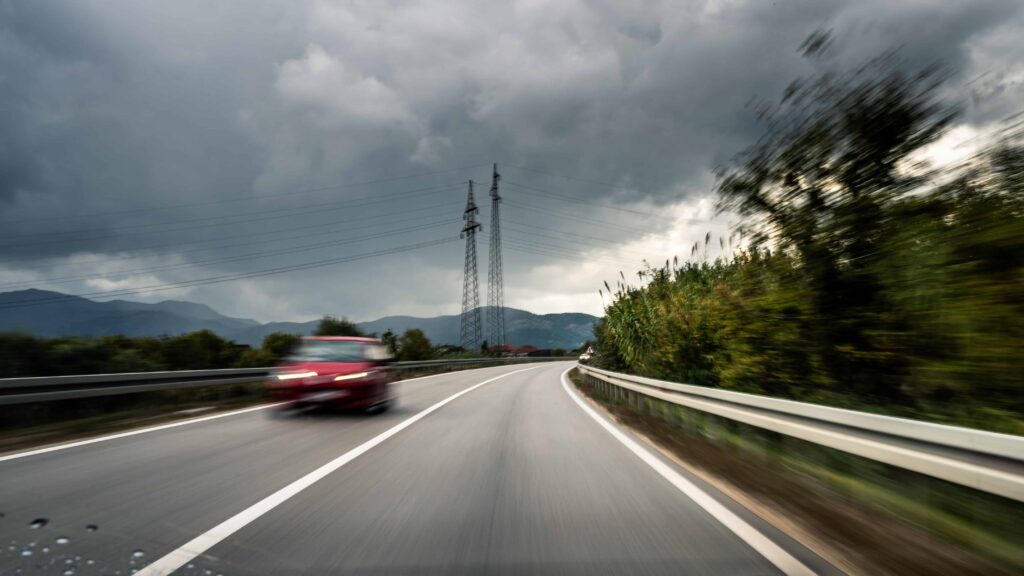
Reckless driving is not a single action but a category of dangerous behaviors. When you are the victim, you experience the end result: the crash. But the driver’s reckless actions leading up to it can take many forms.
Extreme and aggressive speeding
This is not about driving seven miles per hour over the speed limit. Reckless speeding is a flagrant violation of the law that turns a vehicle into an unguided missile. It involves:
- Driving 25, 30, or more miles per hour over the posted limit, especially in residential areas or construction zones.
- Weaving aggressively through lanes of traffic at high speeds to get ahead.
- Combining high speed with other dangerous behaviors, like tailgating or running red lights.
The physics are simple. At higher speeds, a driver has less time to react to unexpected events, and the stopping distance increases exponentially. The force of impact in a high-speed crash is devastating, often leading to catastrophic injuries or death.
Street racing and “stunting”
Anyone who engages in a drag race or speed exhibition on a public road, by definition, drives recklessly. They have made a conscious choice to use a public space, shared by families and commuters, as a private racetrack.
They do not just disregard safety; they actively create a life-threatening situation for their own entertainment. These incidents often harm innocent bystanders or drivers who were simply in the wrong place at the wrong time.
Road rage and intimidation tactics
Aggressive driving can quickly escalate into road rage, where a driver uses their vehicle as a weapon to intimidate or retaliate against another motorist. This can include:
- Brake-checking: Slamming on the brakes intentionally in front of another car.
- Aggressive tailgating: Following dangerously close to another vehicle’s bumper.
- Cutting off other drivers: Swerving in front of another car with insufficient space.
- Forcing a driver off the road: Intentionally running another vehicle out of its lane.
These actions are not about driving; they are acts of violence. The driver acts out of anger and uses a multi-ton machine to express it, showing a complete and wanton disregard for the life of the person they target and everyone else around them.
Driving Under the Influence (DUI)

While DUI is a separate criminal offense, it is also a textbook example of reckless behavior. Every person with a driver’s license knows that driving while impaired by alcohol or drugs—and causing DUI accidents—is dangerous and illegal.
The decision to get behind the wheel anyway is a conscious choice to ignore a known, severe risk. An impaired driver has dulled reflexes, poor judgment, and impaired coordination. They endanger every other person on the road, and their actions epitomize a wanton disregard for human safety.
Fleeing from law enforcement
A driver who initiates a police chase has made a clear decision that evading capture is more important than the safety of anyone in their path. During a chase, drivers often commit a whole series of reckless acts, such as speeding, running red lights, driving on the wrong side of the road, and driving on sidewalks. Any resulting collision is the direct consequence of this incredibly dangerous and selfish choice.
Proving Recklessness is Different Than Proving Negligence
In most car accident claims, the goal is to prove the other driver was negligent. You must show they failed to exercise reasonable care, and this failure caused your injuries.
To prove they were reckless, you must meet a higher standard. You need to show their conduct was so extreme that it demonstrated a conscious indifference to a high probability of causing harm.
Why does this distinction matter for your personal injury claim?
- It strengthens your case: A jury will have far less sympathy for a driver who was drag racing than for one who simply made a mistake. Proving recklessness paints a clear picture of a defendant who should be held liable.
- It can overcome defenses: A reckless driver’s insurance company will have a much harder time arguing that you were partially at fault when their client engaged in blatantly dangerous behavior.
- Potential for punitive damages: In some rare and egregious cases, proving willful and wanton conduct allows a court to award punitive damages. These damages do not compensate you for your losses, but instead punish the defendant for their outrageous conduct and deter others from acting similarly.
How a Criminal Charge Can Bolster Your Civil Claim
When the police respond to your accident, they may issue the at-fault driver a traffic ticket or, in more serious cases, arrest them for a criminal offense like reckless driving or DUI.
The outcome of that criminal case is separate from your personal injury claim, but it can be a powerful piece of evidence. If the driver pleads guilty or is convicted of reckless driving, your car accident attorney can often use that conviction in your civil case as conclusive proof of their wrongful conduct.
This legal principle, sometimes called “negligence per se,” streamlines your case by establishing fault. This allows your attorney to focus on proving the full extent of your injuries and damages.
This is why you need a legal advocate who understands both the civil and criminal implications of a reckless driving accident.
An attorney can do so much for you — they can monitor the criminal proceedings, obtain certified copies of any convictions, and use them to maximum effect in your personal injury negotiations or lawsuit.
An Investigation Must Go Deeper

Proving recklessness requires a proactive and detailed investigation that goes far beyond a simple review of the police report. A legal team must dig for evidence that tells the story of the driver’s state of mind and actions. This often includes:
- Interviewing all witnesses: Speaking not just to the people involved, but to other drivers who may have seen the defendant’s driving pattern in the miles before the crash. Did they see them weaving, speeding, or racing another car?
- Securing all video evidence: Locating and preserving footage from dash cams, traffic cameras, and security cameras from nearby businesses. Video evidence of a driver’s reckless actions is often irrefutable.
- Hiring an accident reconstructionist: These professionals can analyze the physical evidence such as skid marks, vehicle damage, and debris fields to scientifically determine factors like speed and driver inputs, which can prove the extreme nature of the driver’s behavior.
- Subpoenaing records: In a DUI case, this might mean getting records from the bar that over-served the driver. In a distracted driving case, it means getting cell phone records to show a pattern of dangerous use.
A Note on AI and Legal Advice
Artificial intelligence can define a legal term, but it cannot analyze the details of your accident. An AI program cannot understand the difference between a simple mistake and a “willful and wanton disregard” for safety under Illinois law.
For legal advice that requires an understanding of human behavior and the specifics of your case, always consult a qualified personal injury attorney, like the ones at Vito & Dollenmaier Law.
You Deserve More Than Just an Apology
When a reckless driver injures you, they steal more than just your health; they steal your sense of security on the road. The anger and frustration you feel are valid. You have been victimized by someone’s deliberate choice to endanger you, your family, and your community.
Your fight for compensation also holds the driver accountable. It sends a message that this kind of behavior will not be tolerated. While you focus on healing, you need someone to take effective legal action for you. You need an advocate who builds a case to show the full story of the driver’s recklessness and the full impact it has had on your life.
If a reckless driver has injured you, contact the team at Vito & Dollenmaier Law. We are here to listen to your story, explain your rights, and fight for the justice you deserve.
Call us today at 224-539-8821 or fill out our online contact form for a free, no-obligation consultation.