
What Happens If You Get Sideswiped?

The sound is unforgettable. It is not the sudden boom of a rear-end collision but a violent, grinding screech of metal on metal that seems to go on forever. Your car lurches sideways, your head snaps toward the window, and you fight for control of a vehicle that suddenly has a mind of its own.
In that terrifying moment, another driver has violated your safe space by entering your lane without warning. If a negligent driver caused your sideswipe accident in Illinois, you now face a difficult process.
You are dealing with physical pain, a damaged vehicle, and the frustrating reality that you must now fight an insurance company to be made whole again. This is the time to understand your rights and prepare for filing a personal injury claim.
Your Map After the Impact
A sideswipe can be disorienting, both physically and legally. Here are the key landmarks to recognize as you find your way forward.
- Insurance companies dispute fault: Unlike a clear-cut rear-end collision, insurance companies often try to dispute fault in sideswipe accidents. Proving the other driver was negligent requires a thorough investigation.
- Hidden injuries are common: The sideways force of a sideswipe can cause unique and serious injuries to the neck, shoulders, back, and head. These injuries may not become fully apparent for days or even weeks.
- The other driver’s insurer is not your friend: The at-fault party’s insurance adjuster will contact you quickly. Their goal is to get you to accept blame, give a recorded statement that hurts your case, and accept a lowball settlement offer.
- Evidence disappears quickly: Witness memories fade, and traffic or security camera footage can be erased. Gathering evidence to prove what happened is a time-sensitive process that should begin immediately.
The Anatomy of a Violent Encounter
A sideswipe accident happens when the sides of two vehicles traveling in the same or opposite directions make contact. While this may sound less severe than a head-on collision, the dynamics of a sideswipe make it uniquely dangerous.
The primary danger is the sudden and unpredictable loss of control. When another vehicle strikes the side of your car, it applies a lateral force that can easily cause your tires to lose their grip. A driver often instinctively overcorrects in the opposite direction, leading to a spin-out.
This can send your vehicle across multiple lanes of traffic, into oncoming cars, or off the road into a ditch, guardrail, or tree. What begins as a “minor” sideswipe can instantly escalate into a catastrophic secondary collision.
This is especially true on Illinois highways like I-90 or I-294, where high speeds amplify every force. A slight nudge at 65 mph can have the same effect as a powerful shove at a standstill.
The element of surprise is also a major factor. You are focused on the road ahead, monitoring the car in front of you and your own speed. You do not expect an impact from the side. This leaves you with zero time to brace or take evasive action, meaning your body absorbs the full, raw force of the collision.
To hold the other driver accountable, we must prove how their specific careless actions caused the crash.
The Driver Who Hit You: A Story of Negligence
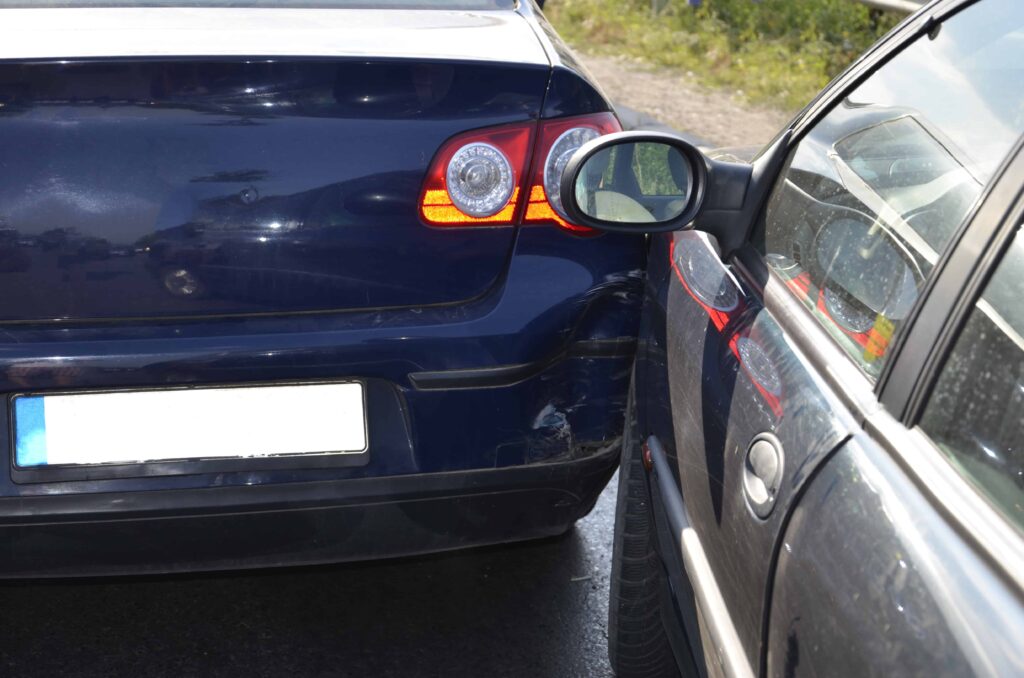
Sideswipe accidents are almost never true accidents. They result directly from a driver’s decision to be careless, reckless, or distracted.
The drifting driver: This is perhaps the most common cause. A driver in an adjacent lane simply drifts over the line and into your vehicle. But why do they drift?
- Distraction: They looked down at their phone to read a text, change a playlist, or check a map. Their eyes were off the road, and their hands were not steady on the wheel.
- Fatigue: Drowsy driving is impaired driving. A tired driver can experience “microsleeps” or simply lose the focus required to maintain their lane position over a long drive.
- Impairment: A driver under the influence of alcohol or drugs has diminished coordination and judgment, making it difficult to stay within the lines.
The unsafe lane change: This driver consciously decides to move into your lane but does so without ensuring it is safe.
- Failure to check the blind spot: They glanced in their mirrors but failed to turn their head to check the notorious blind spot where your car was located. This is a fundamental failure of safe driving.
- Misjudging speed and distance: They saw you but thought they had enough time and space to merge in front of you. Their impatience and poor judgment caused them to cut you off and strike the side of your car.
The aggressive merger: This often happens on highway on-ramps or where lanes converge. An aggressive driver may try to force their way into a line of traffic and refuse to yield the right-of-way. When a driver like you rightfully holds your ground, the aggressive driver may intentionally or recklessly cause a sideswipe.
The overcorrection: Sometimes a driver will swerve to avoid another hazard, like an animal in the road or debris from a truck. In their panic, they overcorrect their steering, sending their vehicle sideways into your adjacent lane. While the initial event may not have been their fault, their panicked and uncontrolled reaction can make them liable for the collision they cause with your vehicle.
The Physical Toll of a Sideways Impact
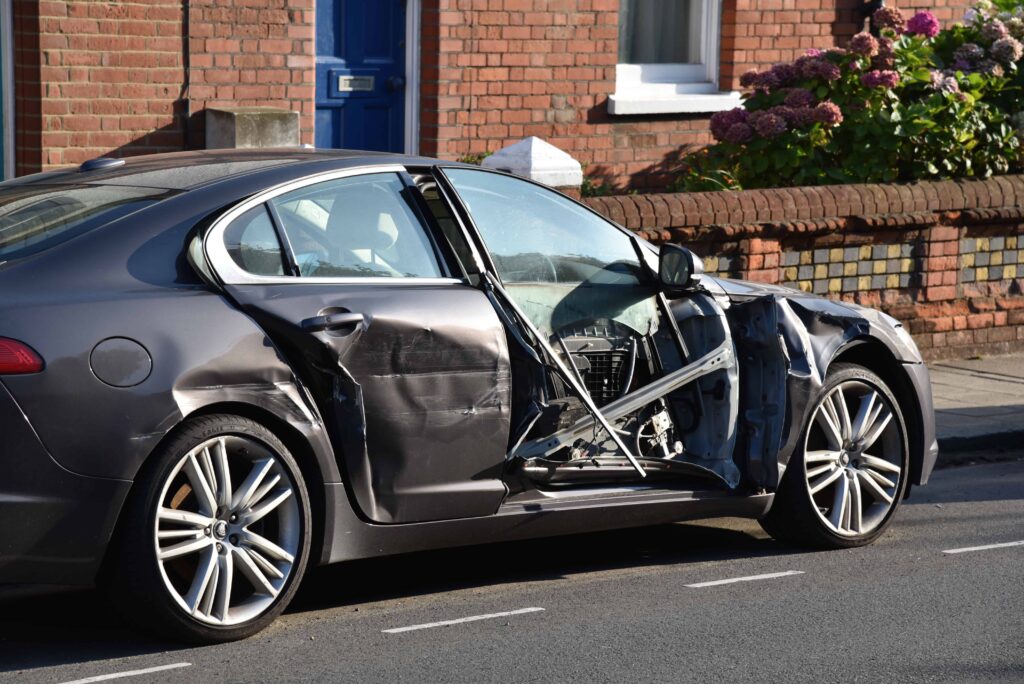
The unique forces in a sideswipe accident often cause a specific and painful set of injuries. Your body is not designed to be jolted violently from the side, and the impact can cause damage that is both immediately apparent and slow to develop.
Neck, back, and shoulder injuries: As the impact pushes your car sideways, your body is whipped violently in the direction of the force.
This can cause severe muscle strains, torn ligaments, and damage to the rotator cuff in your shoulder. If the impact is on the driver’s side, your left shoulder is particularly vulnerable.
The same motion can cause the discs in your spine to herniate or bulge, leading to radiating pain, numbness, and weakness in your arms or legs.
Arm, elbow, and hand injuries: As a driver, you instinctively keep your hands on the steering wheel. When the impact occurs, the crash can slam your arm, wrist, and hand on the side of the collision against the door, window, or interior frame. This can cause deep bruising, fractures, and nerve damage.
Even as a passenger, your arm may be resting on the door or armrest, leaving it completely exposed to the force of the crash.
Head and brain injuries: When your head snaps sideways, it can strike the side window or the “B-pillar,” the post between the front and back doors, with tremendous force. This can cause lacerations and bruising.
The more serious danger is the invisible injury inside your skull. A Traumatic Brain Injury (TBI) occurs when your brain slams against the inside of your skull. Even a seemingly “mild” TBI, or concussion, can lead to persistent headaches, dizziness, memory problems, and mood changes that can affect your ability to work and enjoy your life for months or even years.
Hip and leg injuries: A powerful sideswipe can cause the other vehicle to intrude into your car’s passenger compartment and crush the door inward. This can directly impact your hip, knee, and leg, leading to complex fractures, joint damage, and ligament tears. These injuries often require surgery and extensive physical therapy to regain mobility.
Psychological trauma: The terror and surprise of a sideswipe accident can leave deep emotional scars. Many victims develop anxiety about driving, post-traumatic stress disorder (PTSD), and a persistent feeling of being unsafe on the road. This psychological harm is a very real and compensable part of your injury claim.
The Blame Game: Why Fault is So Complex

After the crash, you might think fault is obvious. The other driver came into your lane, so they are at fault. Unfortunately, insurance companies rarely make it that simple.
The other driver will almost certainly tell a different story to their insurer. They might claim you drifted into their lane, that you were speeding and tried to pass them unsafely, or that you made a sudden move.
Because there is often no clear point of impact, the insurance adjuster will use this ambiguity to create a “word vs. word” situation. Their goal is to argue for shared fault. Under Illinois’s modified comparative negligence rule, this can be devastating to your claim.
As outlined by the Illinois General Assembly (735 ILCS 5/2-1116), if a court finds you partially at fault, it reduces your final compensation by your percentage of blame. If they successfully argue you were 25% at fault, your settlement is cut by 25%. If they can convince a jury you were 51% or more at fault, you get nothing.
This is why an immediate and thorough investigation is necessary. A personal injury attorney will move quickly to preserve and gather the evidence needed to prove what really happened:
- Locating Witnesses: Finding other drivers who saw the crash and can corroborate your version of events.
- Searching for Video Footage: Identifying nearby traffic cameras, gas station security cameras, or doorbell cameras that may have captured the accident.
- Analyzing Vehicle Damage: The location, height, and paint transfer on both vehicles can tell a story about angles and speeds that refutes the other driver’s claims.
- Obtaining Cell Phone Records: If distraction is suspected, an attorney can subpoena the other driver’s phone records to show if they were using their phone at the moment of the crash.
- Accessing the “Black Box”: Most modern cars have an event data recorder (EDR) that captures information about speed, steering, and braking in the seconds before a collision. This data can be invaluable in proving a driver drifted or made a sudden, unsafe maneuver.
Don’t Rely on AI Chat Tools for Legal Advice
AI tools can provide general information, but they don’t understand the specifics of your case or Illinois law. These programs cannot subpoena phone records, hire an accident reconstructionist, or depose a lying driver.
Relying on them for legal advice after a sideswipe accident may lead to critical errors and a failure to secure the evidence needed to win your case. Always consult a qualified attorney, like the ones from Vito & Dollenmaier Law, for guidance.
Your Advocate Against the Insurance Company
The insurance adjuster’s primary job is to protect their company’s profits. They will use the confusion and stress you feel to their advantage. They will pressure you for a recorded statement, hoping you will say something they can twist to mean you accepted partial fault.
They will offer you a fast, low settlement, hoping you will take the quick cash before you realize the true extent of your injuries and the long-term medical care you might need.
Hiring an attorney puts a stop to this. All communication from the insurance company is routed through your car accident lawyer. You no longer have to deal with the stressful calls and manipulative tactics.
Your attorney handles the investigation, gathers medical evidence, calculates your total damages, and negotiates from a position of strength.
They build a case so strong that the insurance company is often forced to offer a fair settlement rather than risk facing the evidence in court. You have been through a traumatic event. Your focus should be on your physical and emotional recovery.
Let a legal professional handle the fight. If a sideswipe accident injured you, let the team at Vito & Dollenmaier Law stand up for your rights. We are committed to holding negligent drivers accountable and securing the resources our clients need to move forward.
Call us today at (224) 539-8821 or fill out our online contact form to schedule a free, no-obligation consultation. We are here to listen to your story and explain how we can help.