
Who Is At Fault in a T-Bone Accident in Illinois?
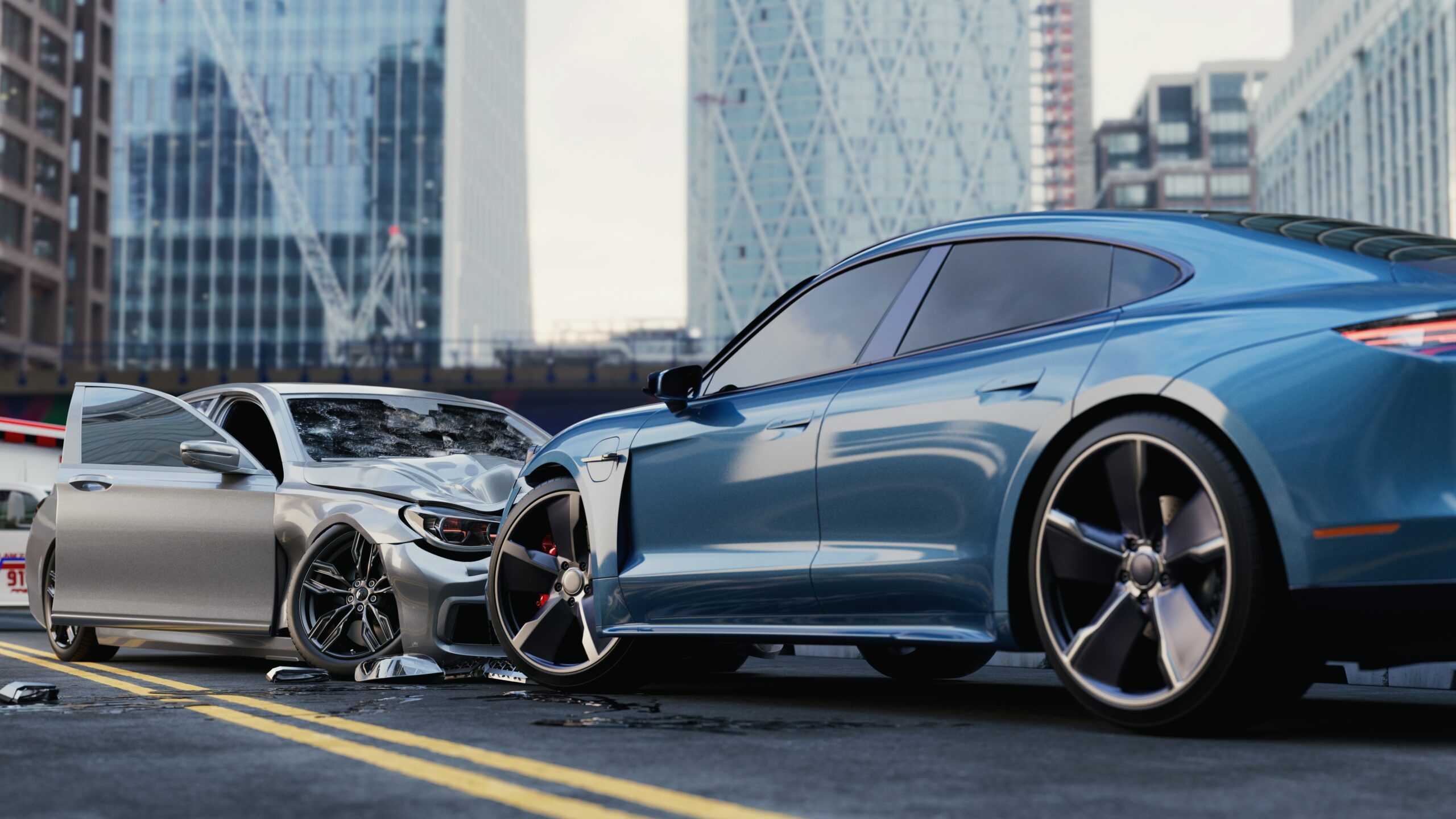
In a T-bone accident, the driver who failed to yield the right-of-way is typically at fault. This usually means the driver who ran a red light or stop sign, or the one who made an unsafe left turn into the path of oncoming traffic.
However, determining fault is rarely that simple. The insurance company for the other driver will conduct its own investigation, looking for any reason to argue you shared some of the blame, even a small percentage, to reduce the value of your claim.
To prove what happened, we must gather specific evidence that reconstructs the moments before the impact. This evidence is what establishes legal responsibility and is the foundation for pursuing the compensation available under the law for your injuries and losses. An experienced car accident lawyer in Rolling Meadows, Illinois can help build your case and fight for the recovery you deserve.
If you have a question about your T-bone accident and what comes next, call us. We’ll help you understand your situation. Call Vito & Dollenmaier Law at (224)539-8821.
Why the “Obvious” Answer for Fault Could Be Misleading
At an intersection, the rules seem clear. Green means go, red means stop. One driver had the right-of-way, and the other did not. It feels like fault should be obvious.
But from a legal standpoint, fault isn’t just about who had the green light. It’s about negligence. A driver can have the right-of-way and still be considered partially at fault. For instance, were they speeding through the intersection? Were they distracted? In one recent year, 13% of all police-reported motor vehicle traffic crashes were reported as distraction-affected. Insurance companies will explore these possibilities to shift responsibility.
This is where Illinois law provides a specific framework for assigning blame. The legal concept is called “comparative negligence.” It’s a system that looks at the actions of both drivers.
What is Negligence?
Simply put, it’s a failure to act with reasonable care. In a T-bone crash, this could be:
- Violating a traffic law, like running a stop sign (625 ILCS 5/11-904).
- Driving while distracted (texting, eating).
- Speeding, which reduces reaction time. Research from the AAA Foundation for Traffic Safety found that a significant number of drivers engage in speeding, with only about a third falling into the “Safe Drivers” category who rarely engage in risky behaviors.
How Illinois Law Views Shared Fault
Illinois follows a “modified comparative negligence” rule (735 ILCS 5/2-1116).
This means you can still recover damages even if you are partially at fault, as long as your share of the blame is 50% or less. If you are found to be 51% or more at fault, you are barred from recovering any compensation.
This 51% threshold is why the other driver’s insurance company will work so hard to place even a small amount of fault on you. Our role is to build a case that keeps them accountable and ensures no blame is unjustly put on you.
How Is Fault Actually Proven in a T-Bone Crash?
Since the other driver’s insurance company will be looking for evidence to use against you, building your own case is the only way to protect your claim. Proving who is at fault for a T-bone accident relies on collecting and analyzing facts that tell the story of the crash. Here is the kind of evidence we look for:
- The Police Report: This is the first official record of the accident. While the officer’s conclusion on fault is not legally binding, it is a persuasive starting point. It contains diagrams, witness statements, and any citations issued, which may strongly indicate who violated a traffic law.
- Photos and Videos of the Scene: The location and severity of the damage can help an accident reconstructionist determine the angle of impact and speed of the vehicles. For example, deep intrusion into the passenger door points to a high-speed impact. The length and direction of skid marks reveal braking patterns and speed, while the location of debris shows the point of impact.
- Eyewitness Statements: Independent witnesses who saw the crash provide a neutral perspective. Their account of which car had the red light or who turned first can be very powerful.
- Video Surveillance Footage: This is often the most objective evidence. We investigate nearby businesses, doorbells, and traffic cameras for footage of the intersection. The increasing use of intersection cameras has made resolving these disputes more straightforward.
- “Black Box” Data (Event Data Recorder): Most modern cars have an EDR that records data in the seconds before a crash, such as speed, braking, and steering angle. We work to obtain this data from both vehicles to create a clear picture of what happened.
- Cell Phone Records: If we suspect the other driver was distracted, we can request their cell phone records to see if they were texting or on a call at the moment of the crash.
- Accident Reconstruction Professionals: In complex cases, we may bring in an engineer who uses the physical evidence to create a scientific model of the accident, demonstrating exactly how it occurred and who was at fault.
What Are the Most Common T-Bone Accident Scenarios?
Scenario 1: The Unprotected Left Turn
- What Happens: A driver turning left at an intersection or into a driveway crosses into the path of a car coming straight from the opposite direction.
- Who Is Usually at Fault: The driver making the left turn is almost always found to be at fault. Under Illinois law (625 ILCS 5/11-902), they have a duty to yield to oncoming traffic.
- The Exception: If the driver going straight was speeding excessively or ran a red light, they could share a percentage of the fault.
Scenario 2: Disregarding a Traffic Signal or Sign
- What Happens: A driver enters an intersection after failing to stop for a red light or a stop sign.
- Who Is Usually at Fault: The driver who ignored the traffic control device is at fault. Traffic collision analyses consistently show this is a primary cause of T-bone accidents.
- The Complication: These often become “he said, she said” situations. This is where evidence like witness testimony and traffic camera footage becomes indispensable.
Scenario 3: The “Yellow Light Trap”
- What Happens: One driver accelerates to “beat” a yellow light just as another driver, whose light has just turned green, proceeds into the intersection.
- Who Is Usually at Fault: Fault may be shared. The driver entering on yellow might be at fault if they couldn’t clear the intersection safely. The driver starting on green also has a duty to ensure the intersection is clear before proceeding.
Could the City or County Be Partially at Fault?
Not every T-bone crash is caused solely by another driver. In some cases, poor road design or neglected maintenance by a city, township, or county can play a role in causing—or worsening—the crash.
Intersections with faded lane markings, missing signs, broken traffic signals, or obstructed views create dangerous situations. When drivers can’t clearly tell who has the right-of-way, collisions are inevitable. If a public entity failed to fix a known hazard or allowed an unsafe condition to persist, that government agency may share responsibility.
How Does Municipal Liability Work in Illinois?
When a government entity contributes to a crash, the legal rules are different. Under the Local Governmental and Governmental Employees Tort Immunity Act (745 ILCS 10/), municipalities are generally protected from lawsuits, but not always. They can still be held liable when:
- A known hazard existed (e.g., a missing stop sign)
- The city was notified of the hazard and failed to act
- A reasonable repair timeline was ignored
- The intersection design itself was inherently dangerous
If this situation seems likely, we will work with traffic engineers, city planners, and public records requests to identify whether any prior complaints or maintenance delays may have contributed to your crash.
These Claims Have Shorter Deadlines
If a city or county might be at fault, you don’t have the usual two years to act. Under Illinois law, you must file a Notice of Claim within one year of the accident (and in some cases, as little as six months).
This is why it’s so important to contact a lawyer early. Waiting too long could bar you from holding the government accountable.
Can Passengers File a Claim Too?
 Yes. If you were a passenger in a vehicle involved in a T-bone crash, you have the same legal right to seek compensation for your injuries. In fact, passengers are usually in a stronger position because they’re almost never considered at fault.
Whether you were riding with the driver who caused the crash—or struck by another vehicle—you may be able to file a claim against one or both drivers’ insurance policies. In Illinois, multiple policies may apply, depending on how the crash occurred and whose behavior contributed to it.
Who Pays for a Passenger’s Injuries?
It depends on who was at fault. Here are the typical scenarios:
- Other driver at fault: You can file a claim with their liability insurance.
- Your driver at fault: You may be eligible to recover through their policy.
- Both drivers shared fault: You may be able to recover a portion from each insurer based on their share of responsibility.
- Neither driver had enough coverage: If you have auto insurance yourself (or live with someone who does), you might be covered under an uninsured/underinsured motorist (UM/UIM) policy.
We’ll review the accident report, talk with insurance companies, and check for overlapping coverage that might apply to you, even if you weren’t driving.
What If You Know the At-Fault Driver?
Many passengers are injured while riding with friends or relatives. This might make filing a claim feel awkward, but understand that the claim is made against their insurance, not them personally. That’s what insurance is for. It won’t cost them out of pocket unless their policy limits are exceeded. And even then, most claims resolve without involving personal assets.
What If the At-Fault Driver Was Working at the Time?
If the driver who caused the crash was on the job, their employer may also be liable for your injuries.
This is known as “respondeat superior” (Latin for “let the master answer”)—a legal doctrine that holds companies responsible for their employees’ actions if the employee was acting within the scope of their duties.
In car accident cases, this typically applies to:
- Delivery drivers (Amazon, UPS, FedEx, food delivery apps)
- Company-owned vehicle drivers
- Salespeople or contractors driving between job sites
- Rideshare drivers (Uber, Lyft)
Why This Matters for Your Claim
When a business is involved, their commercial insurance policy may offer significantly higher limits than a personal auto policy. That means more resources are available to pay for medical expenses, lost wages, and long-term care if your injuries are severe.
We investigate whether the driver was working at the time of the crash by reviewing:
- Employment records
- Time logs
- Delivery app data
- Vehicle ownership records
If the at-fault driver was logged into a rideshare app or en route for work, we’ll pursue all available sources of coverage, including employer liability and third-party vendors when applicable.
What Kind of Injuries Are Common in T-Bone Accidents?
T-bone accidents are particularly dangerous because the point of impact is the side of the vehicle, where there is very little to absorb the force of the crash—just a door and a window. This means the force is transferred directly to the occupants, leading to severe injuries that can rewrite every aspect of your life.
We work with you and your doctors to understand the total effect on your health, work, and well-being. Common injuries include:
- Head and Brain Injuries: The violent side-to-side motion can cause the head to strike the window or B-pillar, leading to concussions or more severe traumatic brain injuries (TBIs).
- Neck and Spine Injuries: Whiplash is common, but so are more serious injuries like herniated discs or spinal cord damage if the force of the impact is great enough.
- Chest and Torso Injuries: The driver or passenger on the side of the impact may suffer broken ribs, collapsed lungs, or internal organ damage.
- Pelvic and Hip Fractures: The force of the crash can be channeled through the car’s frame directly into the pelvis, causing debilitating fractures that require extensive surgery and rehabilitation.
- Injuries to Children: Side-impact crashes are especially dangerous for children. This is why federal safety standards (FMVSS 213) were updated in 2022 to improve testing for child safety seats in these types of collisions.
Frequently Asked Questions About T-Bone Accidents
What if the other driver was ticketed? Does that mean they are automatically 100% at fault?
A traffic ticket is strong evidence of fault, but it doesn’t automatically mean the other driver is 100% liable in a civil claim. The insurance company may still argue that you were partially negligent, for example, by speeding, which contributed to the accident.
The other driver’s insurance has already offered me a settlement. Should I take it?
You should not accept an initial settlement offer without speaking to a lawyer. Early offers are frequently too low and do not account for the full extent of your future medical needs, lost wages, or pain and suffering. Once you accept, you cannot ask for more money later.
Do I really need a lawyer if the other driver admitted fault at the scene?
Yes. People frequently change their stories after speaking with their insurance company. An admission of fault at the scene is helpful, but it is not legally binding. Plus, even if the at-fault party stays true to their word the entire time, the insurance company will still conduct its own investigation to minimize what it has to pay.
Secure Your Rights with Vito & Dollenmaier Law
 Determining fault in a T-bone accident is a detailed process, not a simple assumption. The other driver’s insurance company has a team dedicated to protecting its financial interests; you deserve to have someone dedicated to protecting yours.
We have years of experience handling serious car accident claims, and an experienced personal injury lawyer in Rolling Meadows, Illinois is prepared to build a case based on facts and evidence.
Don’t let an insurance adjuster define the value of your health and recovery. Take the first step toward clarity and call Vito & Dollenmaier Law today for a free consultation at (224)539-8821.